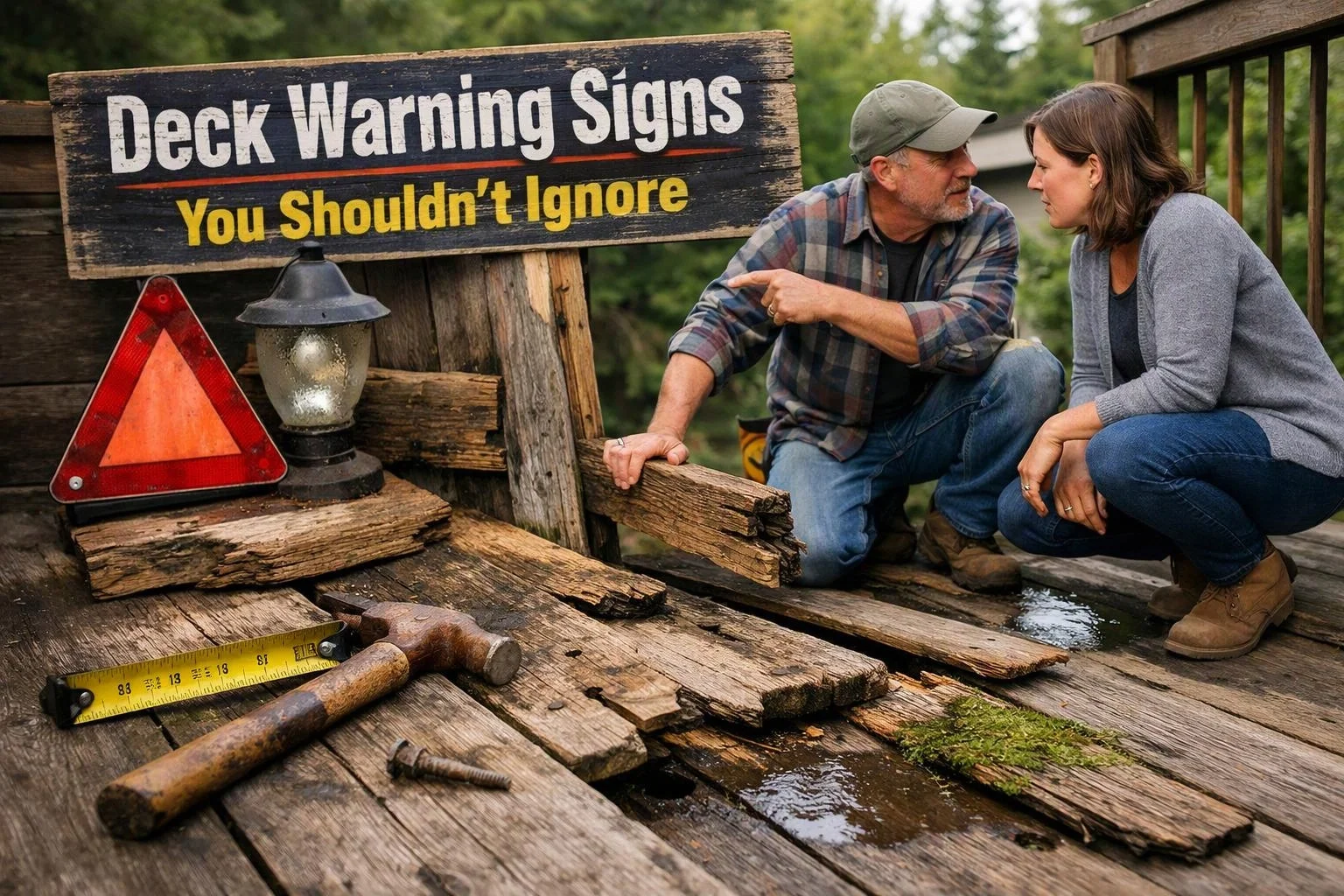
Deck Warning Signs You Shouldn’t Ignore
Deck warning signs include soft spots, rotted wood, loose boards, unstable railings, damaged stairs, and shifting supports. HomeRemodelIssaquah.com can assess the damage and explain whether repair or replacement fits the deck’s condition.
Request an EstimateWhich Deck Warning Signs Need Attention First?
The most urgent deck warning signs are unstable railings, moving stairs, failing supports, and widespread rot. We check whether the damage affects safe use or the deck’s supporting structure.
Structural damage can spread when moisture reaches the framing. Our team checks the visible deck and the connections that hold it together.
Soft Spots or Spongy Deck Boards
Soft deck boards usually point to moisture damage below the surface. Wood rot can weaken boards until they bend or feel spongy underfoot.
We probe the affected area and check nearby boards for spread. Local damage may need board replacement, while deeper damage can involve the framing.
Visible Wood Rot, Cracks, or Decay
Visible wood rot appears as darkened, crumbly, split, or deeply cracked lumber. Fungal decay often starts where water stays against damaged wood.
We trace the damaged lumber to its sound edges. The fix may include replacing boards or completing post, beam, or joist repair.
Loose or Sagging Deck Boards
Loose deck boards move underfoot and can expose raised fasteners. That movement creates trip hazards and may allow more water into the deck.
We check the deck fasteners, joists, and board edges. Our repair scope may include resetting boards, replacing fasteners, or replacing damaged lumber.
Wobbly Railings or Loose Balusters
Wobbly railing sections and loose balusters can make a deck unsafe to use. Loose connections may affect the guardrails, posts, or railing attachments.
We test the railing system and inspect each connection. Railing repair may solve a localized issue, but damaged support posts can require more work.
Shaking Posts, Beams, or Joists
Shaking deck posts, beams, or joists can signal movement in the deck framing. Failed structural connections may reduce the deck’s stability.
We inspect the support points and the connections between framing members. Our crew identifies whether the fix needs post repair, beam repair, or joist repair.
Stairs That Move, Sag, or Feel Uneven
Moving or sagging deck stairs can point to loose stair connections or damaged stringers. Uneven steps also create a clear trip hazard.
We check the stair stringers, treads, supports, and attachment points. Stair repair may address one area, while widespread movement may require rebuilding the stairs.
Standing Water, Mold, or Poor Drainage
Standing water, mold, and poor deck drainage show that moisture is staying too long. Repeated moisture exposure can lead to water damage and wood rot.
We look for blocked drainage paths, low areas, and damaged surfaces. The repair may improve drainage, replace affected materials, or address the source of moisture.
Gaps, Leaning, or Movement in the Deck
Gaps, a leaning deck, or unusual movement can indicate foundation settlement or a weak ledger connection. These signs may involve more than surface boards.
We inspect the ledger board, support points, and deck framing. Our team determines whether the movement needs structural repair or a larger replacement plan.
What Makes Deck Damage More Expensive to Fix?
Deck repair cost depends on the damaged parts, how far rot or movement has spread, access to the work area, and whether the deck needs repair or replacement. Our estimate explains the needed work and materials.
Localized board damage usually has a narrower repair scope than damaged structural framing. Access, material selection, hidden moisture, and connection repairs can also change the work involved.
We inspect the full affected area before preparing a quote. That process helps separate surface repairs from deeper structural work.
Can You Check These Deck Problems Yourself?
You can make a ground-level visual check, but you shouldn't climb onto a deck that feels unstable. We handle unsafe access, structural checks, and repair decisions.
A visual check can identify warning signs, but it can't confirm hidden structural damage. We complete the repair assessment before recommending the next step.
When Should You Call HomeRemodelIssaquah.com?
Call HomeRemodelIssaquah.com when deck movement, soft wood, loose railings, or damaged supports make safe use uncertain.
Our team can assess the condition and explain the repair scope. We can also help determine whether deck restoration or deck replacement is more suitable.
What We Check Before Recommending Deck Repair
We inspect visible surfaces, connections, framing, stairs, railings, and moisture damage before we recommend a repair.
Our team checks deck boards, deck fasteners, the ledger board, support posts, deck beams, and deck joists. We look for loose connections, damaged lumber, and signs that movement reaches the deck framing.
We also consider safe access, the repair scope, and the condition of nearby materials. You can learn more about our deck repair work before requesting an assessment.
Should You Repair the Deck or Replace It?
Deck repair fits localized damage when the main structure remains sound. Deck replacement becomes more suitable when rot, movement, or failed connections affect much of the structure.
We compare the condition of the boards, railings, stairs, framing, and supports. Our recommendation reflects the damage extent and the materials that can still remain in service.
Replacement may also make sense when repairs would leave several connected areas weakened. We explain the available scope so you can make a clear decision.
Questions About Deck Warning Signs
Can a soft spot on a deck be repaired?
Yes, a soft spot can be repaired when the damage is localized and the supporting framing remains sound. HomeRemodelIssaquah.com checks the board, nearby framing, and moisture source before choosing board replacement or deeper repair.
How can you tell if deck wood is rotten?
Rotten deck wood may look dark, crumbly, split, or deeply cracked. Softness, moisture exposure, and fungal decay can also point to rot, so we check whether the damage reaches hidden framing.
Do loose deck boards mean the whole deck needs replacement?
No, loose deck boards don't always mean the whole deck needs replacement. We inspect the fasteners, boards, joists, and surrounding framing to determine whether the issue is localized.
What deck damage should not wait for repair?
Damage involving unstable railings, moving stairs, shaking supports, widespread rot, or a leaning deck should not wait. Avoid unsafe use and contact our team for a repair assessment.
Deck warning signs can involve surface materials or the structure below them. HomeRemodelIssaquah.com can inspect the condition and explain the next practical step.
Contact us for a deck assessment when safe use is uncertain.